
Small Greenhouse Ideas for Tiny Gardens: 10 Compact Solutions for 2026
You know that feeling when you're scrolling through gardening magazines, dreaming of a proper greenhouse, but then you step outside and reality hits? Your garden is about the size of a postage stamp, your patio barely fits a bistro set, or maybe all you've got is a tiny balcony. If you're nodding along, you're not alone. Thousands of British gardeners are working with limited outdoor space, but that doesn't mean you have to give up on growing your own tomatoes, starting seeds early, or keeping tender plants alive through winter.
Here's the thing, traditional greenhouses just aren't realistic for most of us. They need significant garden space, proper foundations, and honestly, planning permission sometimes. But small doesn't mean you're stuck with a few pots on a windowsill. Mini greenhouses and compact designs have come a long way, and they offer genuinely impressive versatility. You can extend your growing season by months, protect delicate seedlings from our unpredictable British weather, and create the perfect microclimate for plants that would otherwise struggle outdoors.
This guide showcases 10 practical small greenhouse ideas, each designed for different space constraints, budgets, and growing ambitions. From ultra-compact mini greenhouses perfect for balconies to clever lean-to designs that maximise wall space, there's genuinely something here for every tiny garden. Whether you've got a narrow side passage, a small patio, or just a sunny corner that's currently going to waste, you'll find an option that works.
Why Small Greenhouses Are Perfect for Compact Gardens
Let's be honest, the British climate isn't exactly known for being kind to gardeners. One minute it's lovely sunshine, the next you're dodging a downpour that threatens to flatten your seedlings. A small greenhouse gives you control over the growing environment in a way that's just not possible with outdoor beds alone.
For starters, mini greenhouses extend your growing season significantly. You can start seeds in March instead of waiting until May, get tomatoes ripening in June rather than August, and keep herbs going well into autumn. The protection from frost means tender plants that would normally be annuals in our climate can actually survive winter, and you're not at the mercy of sudden cold snaps that can wipe out months of work.
Space efficiency is another major benefit. With vertical growing, tiered shelving, and hanging baskets, you can fit an impressive amount into even the smallest greenhouse. I've seen gardeners growing everything from lettuce and herbs to peppers and strawberries in structures that take up less floor space than a garden shed. The frame provides support for climbing plants, you can train tomatoes upwards instead of sprawling outwards, and every inch gets used.
Then there's the microclimate aspect. A small greenhouse creates warmer, more stable conditions than the surrounding garden. This is brilliant for starting seeds, hardening off plants before they go outdoors, or growing Mediterranean vegetables that need consistent warmth. You're essentially creating a little slice of a warmer climate right in your compact British garden.
1. The Ultra-Compact Mini Greenhouse for Balconies and Patios
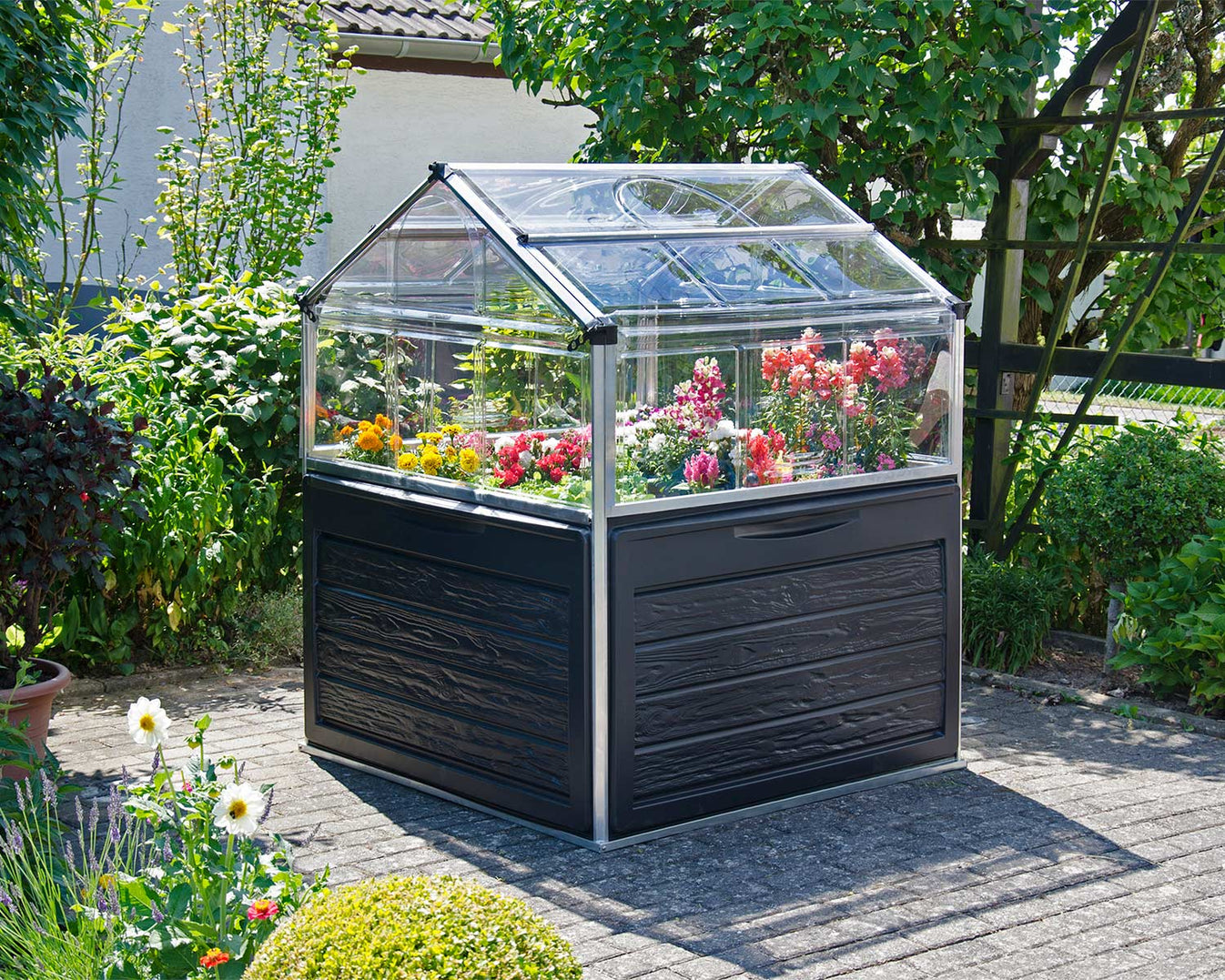
Small Plant Inn Polycarbonate Greenhouse by Canopia
If you're working with seriously limited space, like a balcony or tiny patio, the Small Plant Inn Polycarbonate Greenhouse by Canopia is pretty much perfect. This is about as compact as greenhouses get whilst still being genuinely functional, not just a glorified cloche.
The beauty of this mini greenhouse is its lightweight polycarbonate construction. Unlike glass, which can be heavy and fragile, polycarbonate panels are virtually unbreakable and provide excellent UV protection for your plants. The aluminium frame keeps everything stable without adding excessive weight, which is crucial if you're putting this on a balcony where weight restrictions matter.
What can you actually grow in something this compact? More than you'd think. Herbs are the obvious choice, you can have fresh basil, coriander, and parsley going year-round. Salad leaves and microgreens work brilliantly. Small vegetables like chilli peppers, dwarf tomatoes, and even compact cucumber varieties thrive in the protected environment. And if you're into propagating plants from cuttings or starting seeds, this gives you the perfect controlled space to do it.
The real trick to maximising space in a mini greenhouse is thinking vertically. Use tiered shelving to create multiple growing levels. Hang small baskets from the frame for trailing plants or strawberries. Stack seed trays when you're propagating, and rotate crops as seasons change. I know someone who grows three different herb varieties, a dozen seedling trays, and two tomato plants in one of these, all at the same time.
Assembly is straightforward, you don't need professional installation or special tools. The polycarbonate panels slot into the frame, everything's designed for easy home setup. Maintenance is minimal too, just an occasional wipe down and checking that ventilation openings are clear. For urban gardeners or anyone with a balcony that gets decent sun, this is honestly the perfect entry into greenhouse growing.
2. Traditional Charm: Small Wooden Glass Greenhouses
Shire Hemsby 4x4 Wooden Glass Greenhouse

There's something special about a traditional wooden greenhouse with proper glass panels. It's got that classic British garden aesthetic that polycarbonate just can't replicate, and for gardeners with a bit more space, it offers genuinely superior growing conditions.
The Shire Hemsby 4x4 Wooden Glass Greenhouse is a brilliant example of this style done right. At just over a metre square, it fits into surprisingly compact spaces but provides enough room for serious growing. The timber frame is crafted from slow-grown wood, which is denser and more weather-resistant than faster-grown alternatives. With a 10-year rot resistance guarantee, you're getting a structure that's genuinely built to last.
Toughened glass panels offer maximum light transmission, which is crucial for healthy plant growth. Glass lets through more of the light spectrum than polycarbonate, particularly the wavelengths that plants need for photosynthesis. The four windows provide excellent ventilation, essential for temperature control during summer, and the double doors make access easy when you're carrying seed trays or watering cans.
If you need slightly more space, the Holkham Small 4x6 Wooden Glass Greenhouse extends the growing area without requiring much additional garden space. That extra couple of feet gives you room for a small potting bench alongside your growing area, which honestly makes a massive difference to how you use the space.
Holkham Small 4x6 Wooden Glass Greenhouse

Both greenhouses offer that customisable finish option, you can paint or stain the timber to match your garden's colour scheme. This is particularly nice if you've already got wooden garden furniture or fencing and want everything to coordinate. The traditional craftsmanship shows in the details, proper hinges, sturdy door latches, and frames that are designed to handle the weight of glass without sagging over time.
For growing, these small wooden glasshouses excel at vegetables. Tomatoes, peppers, aubergines, and cucumbers all appreciate the consistent warmth and light levels. You can grow flowers for cutting, start dahlias and tender perennials early, or keep exotic plants that need protection from cold and wind. The timber frame provides excellent insulation compared to metal alternatives, holding warmth better overnight and creating more stable growing conditions.
3. Space-Saving Lean-to Greenhouse Designs
Shire 7x3 Holme Wooden Lean To Greenhouse

Got a south-facing wall that's currently just sitting there doing nothing? A lean-to greenhouse is honestly one of the cleverest ways to create growing space without eating into your garden. The Shire 7x3 Holme Wooden Lean To Greenhouse is specifically designed for exactly this situation.
The lean-to design means you're only using about 600mm of outward space from your wall, but you're getting over 2 metres of length. That's a genuinely useful growing area in a footprint that would otherwise be wasted. Narrow side passages, courtyard walls, even the sunny side of your house, all become potential greenhouse locations.
There's a real advantage to positioning a greenhouse against a wall beyond just saving space. The wall absorbs heat during the day and radiates it back at night, creating slightly warmer and more stable temperatures inside. If you're against a house wall, you might even get a bit of warmth bleeding through from inside, which can make a noticeable difference on cold nights. The sheltered position also means less exposure to wind, which reduces heat loss and protects delicate plants.
The four windows in the Holme design provide excellent ventilation control. This is crucial because lean-to greenhouses can sometimes trap heat more than freestanding models. Being able to open multiple windows creates good airflow without creating damaging drafts. The double doors are a thoughtful feature too, they make access genuinely easy, which matters more than you'd think when you're carrying things in and out regularly.
4. Mid-Range Wooden Glass Greenhouses for Growing Families
Holkham 8x6 Wooden Glass Greenhouse

When you're ready to step up from the absolute smallest options but still working within a compact garden, the Holkham 8x6 Wooden Glass Greenhouse hits a really sweet spot. This size gives you proper working space, a dedicated potting area, plus room for substantial growing, all without dominating a small garden.
The difference between this and the smaller models is genuinely noticeable when you're using it. You can fit a proper potting bench along one side and still have ample space for staging on the other. There's room to actually move around comfortably, which matters when you're spending time potting up seedlings or tending to plants. It's the kind of space where serious hobbyist gardening becomes genuinely enjoyable rather than cramped.
The slow-grown timber construction offers excellent durability and sustainability credentials. The wood is sourced responsibly, which is increasingly important to many gardeners. The comprehensive installation instructions mean this is still very much a DIY-friendly project, though at this size you'll probably want a helper for assembly.
What really makes this size greenhouse practical for year-round growing is the space to create different zones. You can have a warm, humid area for tropical plants and seedlings, a cooler section for hardy vegetables and overwintering plants, and a dedicated propagation area. Temperature and humidity management becomes much easier when you've got room to work with.
For vegetables, this is where you can start thinking about proper production rather than just supplementing shop-bought produce. Ten tomato plants, several peppers, cucumbers, and still room for herbs and salad leaves. You could grow enough to genuinely reduce your weekly vegetable shopping, which over a season makes this size greenhouse a proper investment in food security and quality.
The traditional British greenhouse aesthetic works beautifully in established gardens. This isn't trying to be modern or minimalist, it's embracing that classic kitchen garden look that's been part of British horticulture for generations. The charm genuinely adds to your garden's character whilst providing serious functionality.
5. Large Compact Greenhouses for Maximum Growing Potential
Holkham Large 12x6 Wooden Glass Greenhouse

For gardeners who've got a bit more space to play with but still want something that qualifies as compact by traditional greenhouse standards, the Holkham range offers two excellent options that provide genuinely impressive growing potential.
The Holkham Large 12x6 Wooden Glass Greenhouse gives you nearly 3.6 metres of length whilst maintaining that relatively narrow 1.8-metre width. This footprint works brilliantly in long, narrow gardens where width is limited but length isn't such an issue.
At this size, you're looking at genuine small-scale production capabilities. Multiple growing zones become realistic, you could dedicate one end to propagation and seedlings, the middle section to vegetables in full production, and the far end to tender perennials or exotic plants requiring consistent warmth. The space allows for proper crop rotation within the greenhouse itself, which helps prevent soil-borne diseases and pest build-up.
Holkham Large 16x6 Wooden Glass Greenhouse

If you need even more space, the Holkham Large 16x6 Wooden Glass Greenhouse extends to nearly 4.8 metres. This is getting into serious gardener territory whilst still being manageable for typical British gardens.
Both greenhouses feature four adjustable roof lights, which is a genuinely important detail at this size. Ventilation becomes increasingly critical as greenhouse size increases, and roof vents create the natural convection flow that keeps air moving and temperatures manageable. The adjustable aspect means you can fine-tune airflow based on weather conditions and what you're growing.
The toughened glass panels maximise sunlight penetration, crucial for plants at the far end of a longer greenhouse where light levels can drop. The slow-grown timber frame provides exceptional durability, important when you're investing in a structure this substantial. Traditional gate latch handles on the single door give that authentic period greenhouse feel whilst being genuinely practical for daily use.
These sizes work brilliantly for gardeners who are passionate about growing their own food, want to experiment with more unusual plants, or are looking to move towards a higher degree of self-sufficiency. You could grow enough tomatoes for making and freezing sauce, have a continuous supply of salad leaves through winter, start all your annual flower seeds, and overwinter tender perennials, all in one well-organised space.
The user-friendly assembly, complete with fixing kit and comprehensive instructions, means this is still within reach for competent DIYers. You'll want help with construction, and you'll need to ensure you've got proper foundations or a level base, but it's not requiring professional greenhouse installers or specialist skills.
6. Modern Resin Frame Polycarbonate Greenhouses
Rion Hobby Gardener Resin Frame 8ft x 12ft Polycarbonate Greenhouse

Not everyone wants traditional timber and glass. For gardeners prioritising low maintenance, weather resistance, and modern materials, the Rion Hobby Gardener range offers excellent alternatives that genuinely suit contemporary lifestyles.
The Rion Hobby Gardener Resin Frame 8ft x 12ft Polycarbonate Greenhouse showcases what modern greenhouse design can achieve. The resin frame is completely weather-resistant, it won't rot, rust, or require painting. Ever. This is genuinely set-it-and-forget-it construction.
The twin-wall polycarbonate panels offer several advantages over glass. They're virtually unbreakable, which matters if you've got children playing nearby or live somewhere exposed to strong winds. The twin-wall construction provides better insulation than single-layer glass, holding warmth more effectively overnight and reducing temperature fluctuations. UV protection is built into the material, protecting both your plants and preventing the panels from degrading in sunlight.
Made in the UK, these greenhouses are designed specifically for British weather conditions. The unpredictable mix of rain, wind, occasional snow, and summer heat we experience has been factored into the engineering. The durable construction means this greenhouse will handle whatever our climate throws at it.
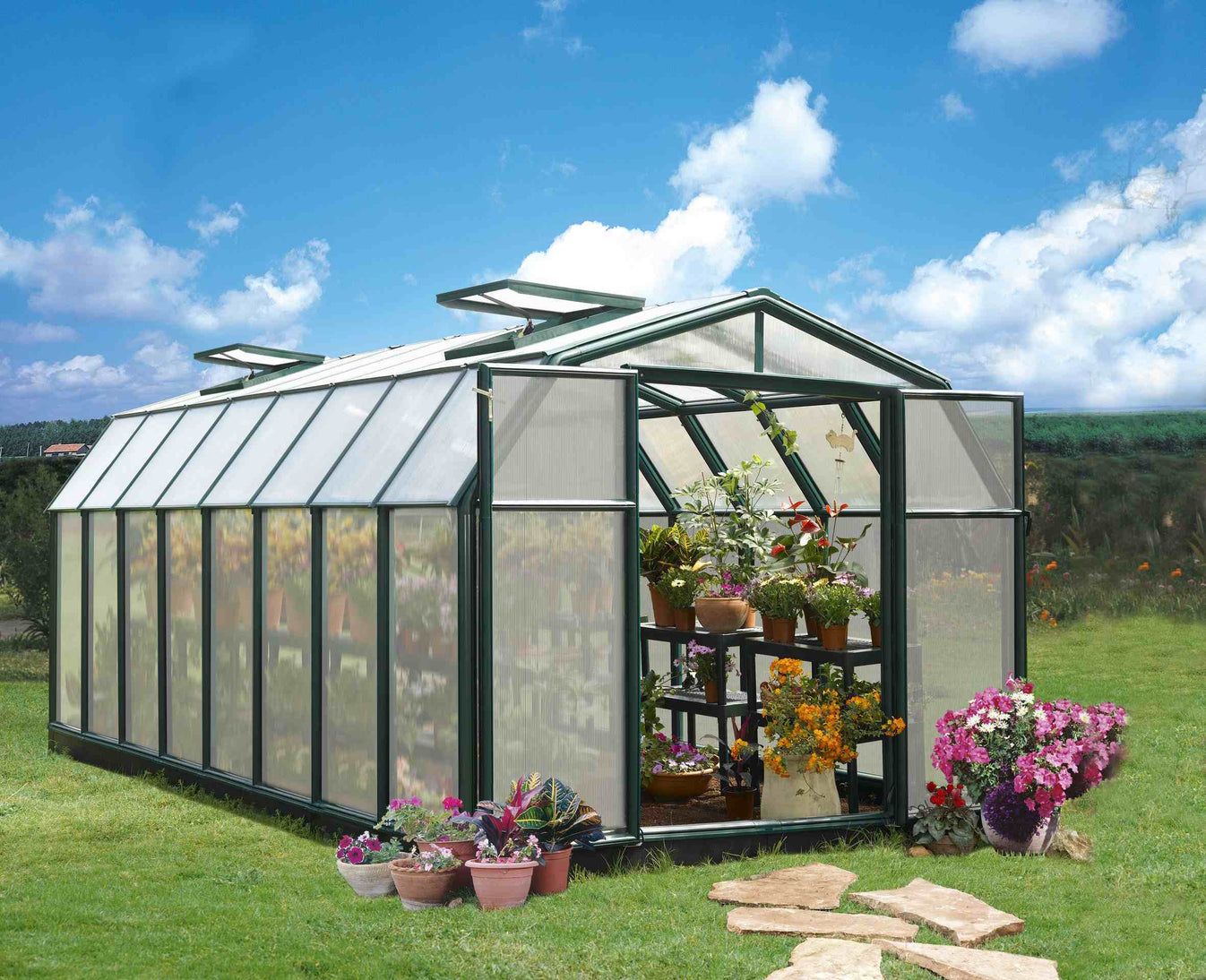
Rion Hobby Gardener Resin Frame 8ft x 20ft Polycarbonate Greenhouse

The beauty of polycarbonate for year-round use in Britain is how it handles our damp conditions. Glass greenhouses can develop condensation problems, particularly in winter when the temperature differential between inside and outside is significant. Polycarbonate's insulation properties reduce this issue, and any condensation that does form tends to run down the panels rather than dripping on plants.
For busy gardeners, the maintenance advantage is genuinely significant. No annual wood treatment, no replacing broken glass panes, no rust to manage. An occasional wash to remove algae and dirt buildup is basically it. That time saving adds up over years of ownership.
These greenhouses work brilliantly for vegetable production. The consistent temperatures suit tomatoes, peppers, aubergines, and cucumbers. The space allows for serious quantities, you're looking at potentially freezer-filling harvests if you plan your growing well. And the quality construction means you can rely on this greenhouse protecting your crops year after year.
Choosing the Right Small Greenhouse for Your Space
Measuring Your Space
First things first, measure your available space accurately. Don't just eyeball it. Get a tape measure and mark out the actual footprint, including space for door opening. A greenhouse might fit in a space on paper, but if you can't actually open the door fully or walk around it comfortably, you'll regret the purchase.
Allow at least 50cm of clearance around the greenhouse for maintenance access. You'll need to clean panels, check for damage, and possibly repair things over the years. Being able to walk around the structure makes all of this massively easier. Consider overhead clearance too, you'd be surprised how many people forget about the washing line or overhanging tree branches until they're trying to position a greenhouse underneath them.
Think about pathways. If your greenhouse is going to be your main growing space, you'll be visiting it regularly with watering cans, seed trays, and armfuls of harvested vegetables. A clear, level path makes this so much more pleasant, particularly in wet weather when you're traipsing across the garden.
Material Considerations
The glass versus polycarbonate decision is genuinely important and depends on your priorities. Glass provides superior light transmission, which translates to better plant growth, particularly for light-hungry crops like tomatoes. It looks more traditional and fits better aesthetically in period gardens. However, it's heavier, more fragile, and requires more careful handling during assembly.
Polycarbonate is lighter, virtually unbreakable, and provides better insulation. It's easier to assemble, safer if you've got children around, and requires less maintenance. The trade-off is slightly reduced light transmission, though modern twin-wall polycarbonate is genuinely good and most plants won't notice the difference.
For frames, timber offers excellent insulation and that traditional aesthetic many gardeners love. It requires more maintenance, you'll need to treat it every few years to maintain weather resistance. Aluminium and resin frames are maintenance-free and often lighter, making assembly easier. They don't insulate quite as well as timber but the difference is minimal in smaller greenhouses.
What to Grow
Your growing ambitions should heavily influence size selection. If you're mainly interested in starting seeds and growing a few herbs, a mini greenhouse or small 4x4 model is genuinely sufficient. You don't need massive space for propagation, and herbs are perfectly happy in compact environments.
For serious vegetable growing, you want at least 6ft of length, preferably 8ft or more. This gives you room for a proper crop rotation, multiple varieties, and enough space that you're genuinely supplementing your weekly shop rather than just having the occasional home-grown tomato.
Specialist plants like orchids, cacti, or tropical species might need specific conditions that are easier to create and maintain in slightly larger greenhouses where you can dedicate zones to different environments. Cold frames are brilliant stepping stones if you're not quite ready for a full greenhouse but want more than just outdoor growing.
Budget matters, obviously, but think about long-term value. A slightly more expensive greenhouse with better materials and construction will last longer and perform better, potentially saving money over replacing a cheaper model that doesn't hold up to British weather.
Maximising Space in Your Small Greenhouse
Once you've got your greenhouse, the real skill is using every bit of space efficiently. This is where clever organisation and vertical thinking make a massive difference to what you can actually grow.
Vertical growing is your best friend in a small greenhouse. Train tomatoes up strings or canes rather than letting them sprawl. Cucumbers, beans, and peas all climb naturally, so give them support and let them grow upwards. This frees up your staging space for other crops whilst maximising the growing area.
Hanging baskets aren't just for flowers. Strawberries grow brilliantly in hanging containers, saving valuable bench space for other plants. Trailing tomato varieties work well suspended, and herbs in hanging planters keep them accessible whilst leaving room underneath for taller crops.
Tiered staging and shelving systems basically multiply your growing area. A three-tier shelf unit can triple the number of seed trays or small pots you can accommodate in the same footprint. Position higher shelves towards the back or sides where you don't need as much headroom, keeping the central area clear for taller plants.
Companion planting works just as well in greenhouses as in outdoor beds. Basil and tomatoes are the classic combination, the basil supposedly improves tomato flavour whilst helping deter pests. Marigolds among vegetables add colour whilst their strong scent confuses pests. Just make sure companion plants have similar water and temperature requirements.
Succession planting strategies extend your harvest period and maximise space usage. As soon as one crop finishes, have seedlings ready to replace it. You can be growing spring lettuce whilst starting summer tomato plants, then transition to autumn crops before the tomatoes finish. There's rarely a need for empty space if you plan ahead.
Train plants horizontally along greenhouse edges to maximise every inch. Squashes and melons can sprawl along the base perimeter, cucumbers can grow horizontally along side walls if you support the fruits. This creative use of often-wasted edge space genuinely increases your productive area.
For tomatoes specifically, they're one of the most popular greenhouse crops and respond brilliantly to proper training. Cordon varieties can easily grow to 6 or 7 feet, using vertical space efficiently. Remove side shoots regularly to keep plants manageable and focus energy on fruit production. Support the main stem with string or canes, and you'll get impressive yields from minimal floor space.
Year-Round Growing in Your Small Greenhouse
One of the best things about having a greenhouse is the ability to grow something every month of the year. Understanding how to manage your space through the seasons maximises productivity and keeps you enjoying fresh harvests year-round.
Spring is when greenhouses really prove their worth. You can start vegetable seeds 6-8 weeks earlier than direct outdoor sowing, giving you a massive head start on the growing season. Tomatoes, peppers, aubergines, and cucumbers all benefit from early sowing in the protected environment. Hardy annuals like sweet peas can be started in late winter for early flowers. Seedlings grow faster in greenhouse warmth, and you're not worrying about late frosts decimating your hard work.
Summer presents different challenges, mainly preventing overheating. Ventilation becomes crucial, open all available windows and doors on warm days. Shade cloth helps prevent scorching. Watering needs increase dramatically, you might be watering twice daily during hot spells. This is peak growing season for greenhouse tomatoes, peppers, and cucumbers. Regular harvesting encourages continued production, and you'll be enjoying the fruits of your labour literally.
Autumn is about extending the season as outdoor temperatures drop. You can keep tomatoes cropping well into October or even November with greenhouse protection. Start winter salads like lettuce, rocket, and oriental leaves for fresh greens through colder months. Sow broad beans for early spring crops. The greenhouse becomes a haven for tender plants that need bringing under cover before frosts arrive.
Winter might seem quiet, but there's still plenty happening in a well-managed small greenhouse. Hardy salad leaves continue growing slowly but steadily, providing fresh pickings when shop-bought options are expensive and uninspiring. Overwinter tender perennials like pelargoniums, fuchsias, and dahlias in pots, keeping them frost-free and ready for spring planting. Start early vegetable seeds in heated propagators for super-early crops.
British climate-specific tips matter because our weather is genuinely unpredictable. Always have fleece or bubble wrap ready to provide extra insulation during unexpected cold snaps. Watch for condensation buildup in winter, which can encourage fungal diseases, wipe down glass or polycarbonate regularly and ensure some ventilation even on cold days. Spring frosts can happen well into May, so don't assume winter's over just because it's warming up.
Creating growing calendars helps you plan succession planting and ensures your greenhouse is always productive. Note when to start seeds for each crop, when to transplant, and when harvest typically occurs. After a year or two, you'll have a personalised calendar that accounts for your specific greenhouse conditions and local climate.
Crop rotation prevents soil-borne diseases building up if you're growing in greenhouse borders rather than pots. Rotate tomatoes with different crop families like legumes or brassicas. Even in containers, changing what you grow in each pot from year to year helps maintain healthy growing conditions.
Getting Started with Your Small Greenhouse Journey
Limited garden space genuinely doesn't limit your growing potential, it just requires a bit more creativity and planning. From ultra-compact mini greenhouses perfect for balconies to substantial wooden glasshouses that can supply a family with vegetables, there's genuinely an option for every space, budget, and ambition.
The beauty of starting with a small greenhouse is that it's not overwhelming. You learn temperature management, understand how different plants respond to protected growing, and develop the skills that make you a better gardener overall. You can start modestly, perhaps with just herbs and seedlings, and gradually expand into more ambitious crops as your confidence grows.
Shop Small Greenhouses Right Here!
What surprised me researching this is how much variety exists within the small greenhouse category. You're not settling for a compromise, you're choosing from genuinely excellent options that suit different gardening styles and preferences. Whether you're drawn to the traditional charm of timber and glass or the practical benefits of modern polycarbonate and resin, there's quality available at every price point.


