
Plastic Sheds vs Wooden Sheds vs Metal Sheds: Which Garden Shed Material is Right for You?

You're standing in a garden centre or scrolling through endless pages online, completely overwhelmed by shed options. Plastic, wooden, metal, they all look fine in the photos, but which one should you actually buy? If you're feeling confused about plastic sheds vs wooden sheds vs metal sheds, you're definitely not alone. It's honestly one of the most common questions we hear from gardeners.
Here's the thing, choosing the right shed material isn't just about picking whichever looks nice or costs the least. It affects how long your shed will last, how much time you'll spend maintaining it, what it'll cost you over the years, and whether it'll actually suit your garden and lifestyle. Each material has genuine strengths and real weaknesses, there's no getting around that.
In this guide, we'll examine each shed material honestly and thoroughly. We'll cover durability, maintenance requirements, cost implications, how they handle British weather, and what they actually look like in real gardens. We'll talk about plastic (sometimes called vinyl or resin), traditional timber, and metal sheds, giving you the full picture of each.
By the end, you'll understand exactly which type of shed suits your garden, your budget, and your lifestyle. No sales pitch, just practical information to help you make a confident decision.
Why Your Choice of Shed Material Matters
Your shed material choice has bigger implications than you might initially think, so it's worth getting this decision right.
The material directly affects how long your garden shed will last. Wood can rot if not properly maintained, metal can rust if the protective coating gets damaged, and cheap plastic can become brittle over time. Quality versions of each material can last decades, but they all have different vulnerabilities that you need to understand.
Then there's the ongoing maintenance commitment. Some shed materials demand regular attention, others you can basically ignore for years. If you're someone who loves spending weekends caring for your garden buildings, annual timber treatment might be enjoyable. If you'd rather spend that time actually gardening, a low-maintenance option makes more sense.
UK weather conditions play a massive role too. Our climate throws everything at garden buildings, prolonged rain, occasional snow, humidity, strong winds, and those random sunny spells that make us all briefly forget what country we live in. Different materials handle these conditions very differently.
Aesthetics matter as well, whether we admit it or not. A shed that looks out of place in your garden will always bother you slightly. Traditional timber blends beautifully into cottage gardens but might look odd in ultra-modern spaces. Plastic sheds have come a long way aesthetically, but they still suit some garden styles better than others.
Long-term costs deserve consideration beyond the initial purchase. A cheaper shed that needs replacing in five years costs more than a pricier one lasting twenty years. Factor in ongoing treatment costs for wood or potential rust repair for metal, and the total cost of ownership can surprise you.
The Three Main Garden Shed Materials
Before we dive into detailed comparisons, let's clarify what we're actually talking about when we say plastic, wooden, or metal sheds.
Plastic sheds (also called vinyl sheds or resin sheds, the terms are used pretty much interchangeably) are manufactured from materials like PVC or polycarbonate. Modern plastic sheds are miles better than the flimsy options from years ago. They're moulded into panels that slot together, creating weather-resistant structures that require minimal maintenance. Quality matters enormously here, budget plastic sheds and premium resin models are genuinely different products.
Wooden sheds (or timber sheds, same thing) represent the traditional garden building choice. They're typically constructed using shiplap or tongue-and-groove boards over a solid frame. The quality of timber, whether it's pressure-treated, and the construction method all affect durability and longevity. When people picture a garden shed, they're usually imagining a wooden one, that classic aesthetic is deeply ingrained.
Metal sheds are usually made from galvanised steel with powder-coating for weather resistance. Modern metal sheds are very different from the old corrugated iron sheds your grandparents might have had. They're engineered for strength and corrosion resistance, with reinforced frames and careful design to handle our variable climate.
Plastic Sheds: The Modern Low-Maintenance Option
What Are Plastic Sheds Made From?
Today's plastic sheds use sophisticated materials engineered specifically for outdoor durability. Most are constructed from vinyl or resin compounds, essentially heavy-duty PVC that's been formulated to withstand weather exposure. The manufacturing process involves moulding these materials into interlocking panels with reinforced ribs and structures built into the design.
Higher-end plastic sheds often use polycarbonate, the same virtually unbreakable material used in everything from safety glasses to greenhouse panels. Polycarbonate offers exceptional impact resistance and UV protection, addressing one of the main weaknesses of cheaper plastic options.
Modern resin sheds incorporate UV stabilisers directly into the material during manufacturing. This prevents the deterioration and brittleness that plagued early plastic sheds. Quality has genuinely improved to the point where a well-made plastic shed can last 15-20 years or more with virtually no maintenance.
Many plastic sheds now use recyclable materials too, which matters if environmental impact is part of your decision-making process. The manufacturing footprint is often lower than you'd expect, and end-of-life recycling is increasingly possible with quality plastic shed materials.
The panels themselves are weather-sealed during moulding, so there aren't the same vulnerable joints and gaps you might get with timber construction. This inherent weather resistance is one of plastic's biggest advantages in our rainy climate.
Advantages of Plastic Sheds
Let's talk about what plastic sheds do really well, and there's quite a lot to like.
- Virtually maintenance-free is the headline benefit. You don't need to paint, treat, or preserve anything.
- Rot and rust-proof by their very nature. Plastic doesn't rot like wood or corrode like metal.
- Weather-resistant in ways that make them ideal for British gardens. Rain runs straight off, snow doesn't cause issues, and the materials don't absorb moisture.
- Easy to assemble compared to wooden sheds.
- Clean appearance that stays that way. A quick wipe with soapy water removes dirt, and the smooth surfaces don't harbour mould, mildew, or green algae the way timber can.
- Cost-effective both initially and long-term.
- Durable in our moderate climate. The UK doesn't get extreme temperature swings or intense UV exposure like some countries, which suits plastic perfectly.
- Lightweight which makes them easier to move if you decide to reorganise your garden layout. You can relocate a plastic shed without needing a team of people or specialist equipment.
Disadvantages of Plastic Sheds
Now for the honest bit, because plastic sheds aren't perfect for everyone.
- Can become brittle over time, especially cheaper models. Budget plastic sheds exposed to years of UV radiation can deteriorate, becoming fragile and prone to cracking.
- Limited customisation compared to wood. You can't paint a plastic shed a different colour if you fancy a change.
- Ventilation considerations are important. Some plastic sheds can suffer from condensation if they're not properly ventilated.
- Less "solid" feel than timber or metal.
- Anchoring essential for safety.
- Quality varies enormously between manufacturers.
Who Should Choose a Plastic Shed?
Plastic sheds make perfect sense for specific situations and people.
- If you want minimal maintenance commitment, plastic is ideal. People who'd rather spend weekends gardening instead of maintaining their shed will appreciate the zero-upkeep reality of plastic.
- Those in humid areas where rot is a persistent concern should seriously consider plastic. If your garden sits in a damp hollow or you've had timber sheds rot quickly in the past, plastic solves that problem completely.
- Anyone seeking easy assembly will find plastic sheds much more approachable than wooden alternatives. First-time shed buyers often appreciate the straightforward construction.
- Gardeners prioritising practicality over aesthetics do well with plastic sheds. If your shed is purely functional and tucked away somewhere, looks matter less than durability and convenience.
- Those needing to relocate sheds occasionally benefit from plastic's lightweight nature. If you're in rented accommodation or like to reorganise your garden regularly, movability matters.
- Buyers on a budget seeking long-term value should look at plastic. The combination of lower initial cost and zero ongoing maintenance costs adds up to excellent value over the shed's lifetime.
Plastic Shed Recommendations
Shire Tuscany EVO 120 4x4 Plastic Garden Shed with Double Doors
The Shire Tuscany EVO 120 demonstrates plastic sheds can look attractive. Mediterranean-inspired design, acrylic-glazed windows provide natural light, and weather-resistant, recyclable PVC offer style and low maintenance for smaller gardens.
SkyLight Plastic 4x6 Dark Grey Pent Shed by Palram
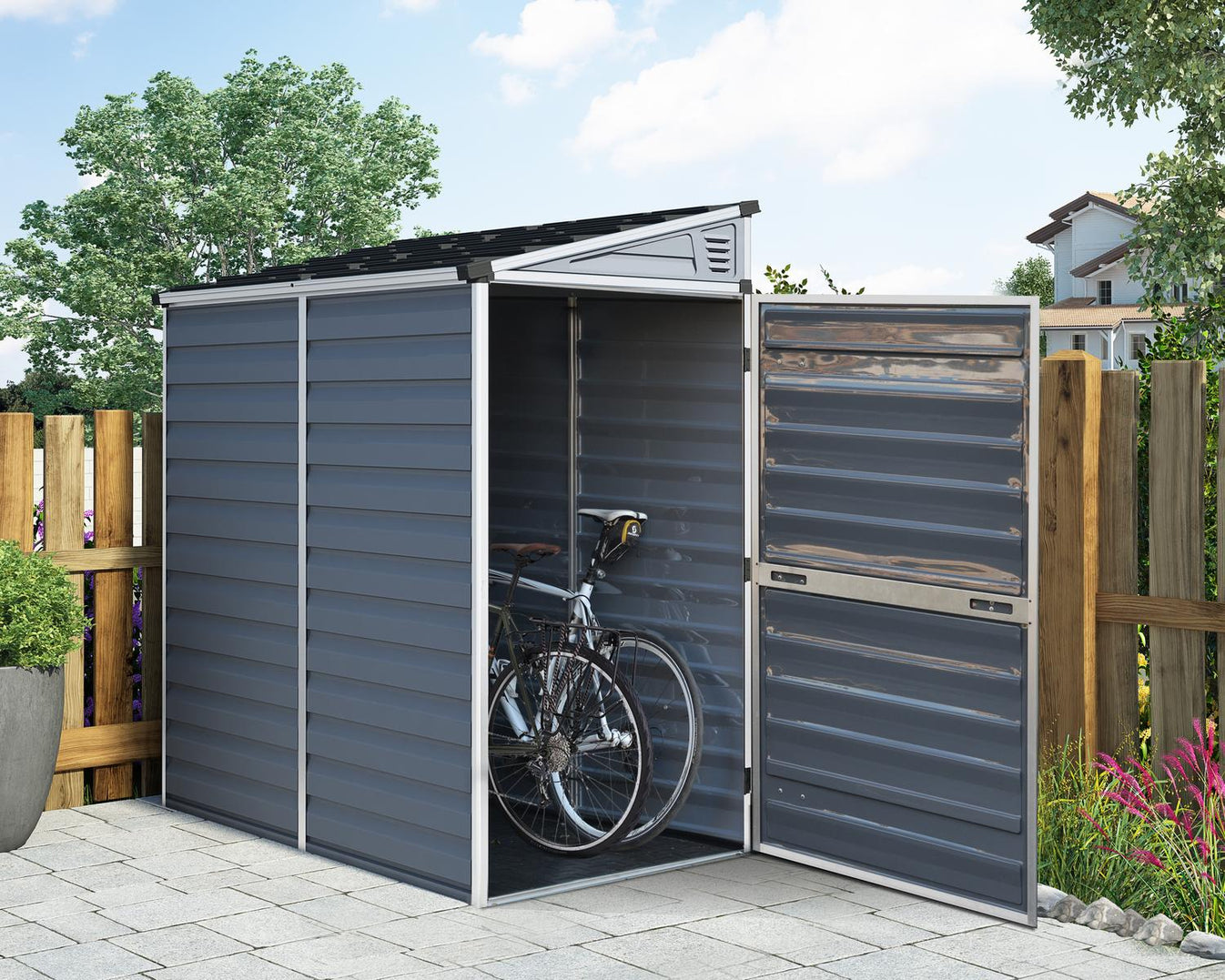
The SkyLight Plastic 4x6 Pent Shed from Canopia by Palram features modern polycarbonate construction with impact resistance, rust-proof frame and sleek dark grey finish, perfect for contemporary gardens.
SkyLight Plastic 6x8 Dark Grey Garden Shed by Palram
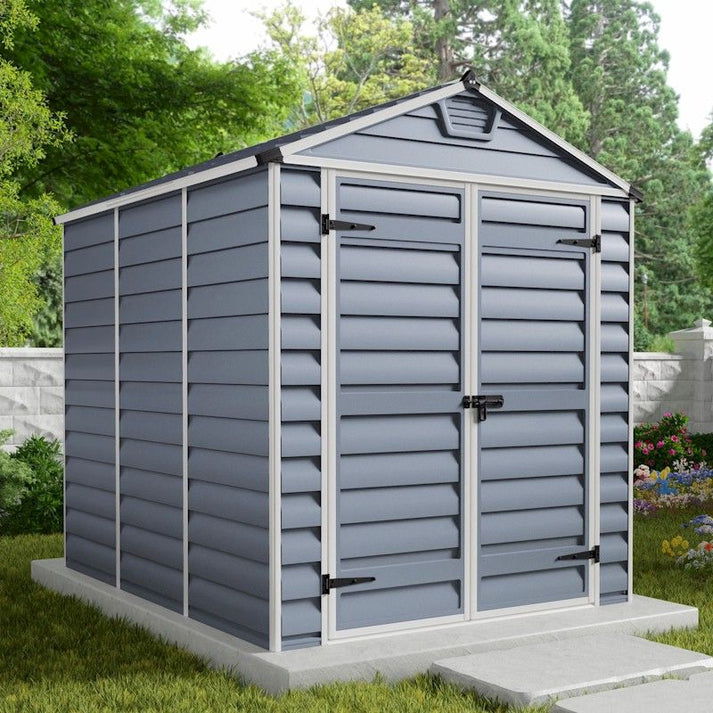
The SkyLight 6x8 offers substantial plastic storage that remains low-maintenance and durable, with modern aesthetics and family-sized capacity ideal for larger garden spaces.
Wooden Sheds: The Traditional Classic Choice
Understanding Timber Shed Construction
The construction method significantly affects a wooden shed's quality and longevity, so it's worth understanding the basics.
Shiplap construction uses boards overlapping horizontally creating weather-resistant seals; water runs off rather than penetrating joints. Tongue-and-groove construction features interlocking edges for very tight joints, often seen in higher-end sheds. Pressure-treated timber is wood treated under pressure with preservatives, giving deep protection against rot. Timber quality matters, with slow-grown Northern European timber denser and longer-lasting. FSC certification ensures timber comes from responsibly managed forests. Frame construction refers to structural wooden support, with thicker frames adding stability. Floors and roofs vary; tongue-and-groove floors are superior, with OSB roofs typically covered by felt.
Advantages of Wooden Sheds
- Natural aesthetic appeal: warm, blends beautifully into gardens especially traditional or cottage styles.
- Highly customisable: paint or stain in any colour, add windows or extend.
- Solid, substantial feel: sturdy, secure, evokes quality and permanence.
- Good insulation properties: better temperature regulation than plastic or metal.
- Repairable: damaged panels can be replaced, extended lifespan.
- Traditional charm: perfect for period properties.
- Can add property value.
- Versatile usage: suitable for workshops or hobby rooms.
- Wide range of sizes and styles.
Disadvantages of Wooden Sheds
- Requires regular maintenance: annual treatment needed to prevent rot.
- Susceptible to rot especially if neglected.
- Can attract insects: wood-boring beetles possible.
- More expensive initially than plastic or metal.
- Heavier and harder to move.
- Treatment costs add up over time.
- Weather damage potential if maintenance lapses.
- Longer assembly time compared to plastic.
Who Should Choose a Wooden Shed?
- Those who prioritise garden aesthetics and traditional look.
- Gardeners who enjoy maintenance rituals.
- People wanting a sturdy and solid garden building.
- Users wanting insulated work/hobby spaces.
- Owners of period or traditional homes.
- Those wanting maximum customisation options.
- Buyers seeking long-term quality investment.
Wooden Shed Recommendations
Small Wooden Tool Storage Shed with Double Doors & Felted Roof

Compact, affordable quality timber shed with pressure-treated wood, double doors for access, felted roof for waterproofing, and ventilation gaps to prevent condensation. Ideal for small gardens and basic equipment storage.
Shire 7x7 Shiplap Pent Wooden Garden Shed

Quality timber construction with FSC certified slow-grown wood, weather-tight shiplap tongue-and-groove boards, 34mm framing, OSB roofing and flooring. Pent roof design suits traditional and modern gardens alike.
Metal Sheds: The Secure, Durable Alternative
Metal Shed Construction and Materials
Modern metal sheds bear little resemblance to the corrugated iron monstrosities of decades past. Today's versions are engineered garden buildings.
- Galvanised steel core with zinc coating for corrosion resistance.
- Powder-coating baked on for weather resistance and colour.
- Reinforced frames and panels for strength and wind resistance.
- Multiple rust-resistant treatments ensuring longevity.
- Protective coatings must remain intact to prevent rust.
Advantages of Metal Sheds
- Excellent security: difficult to break into.
- Fire-resistant: does not burn.
- Pest-proof: no insects or rodents.
- Very durable: can last 20-30 years with minimal maintenance.
- Weather-resistant: resists rain, snow, and wind.
- Low maintenance: needs only occasional touch-ups.
- Cost-effective: often cheaper initially with low upkeep.
- Stable structure: does not warp or settle.
- Lightweight yet strong: easier assembly yet sturdy.
Disadvantages of Metal Sheds
- Condensation issues: cold surfaces attract moisture inside.
- Rust potential: vulnerable if coatings get scratched.
- Less attractive: industrial look.
- Poor insulation: hot in summer, cold in winter.
- Noisy in rain: drumming sound on roof.
- Dents easily: impacts damage appearance and coating.
- Difficult to modify: limited customization.
- Limited sizes: less variety than timber.
- Assembly precision required: panels must fit exactly.
Who Should Choose a Metal Shed?
- Those prioritising security.
- Gardens in wet or humid locations.
- Need for pest-proof storage.
- Minimal maintenance preference.
- Functional, industrial appearance is acceptable.
- Exposed, windy locations.
Choosing the Right Shed Material for Your Needs
It's all down to preference, but also what you need your shed for. Obviously, between metal, wood and plastic sheds, they all look and feel different. There are cost considerations for each type of shed too. Metal and wood will cost more than a plastic option.
We have a range of plastic sheds, metal sheds and solid wooden sheds here at Garden & Patio for you to browse. If you need help deciding on a particular shed, or have questions, then do not hesitate to speak with our friendly expert team.


