
6 Permanent Gazebo Ideas to Create Your Dream UK Garden Shelter in 2026
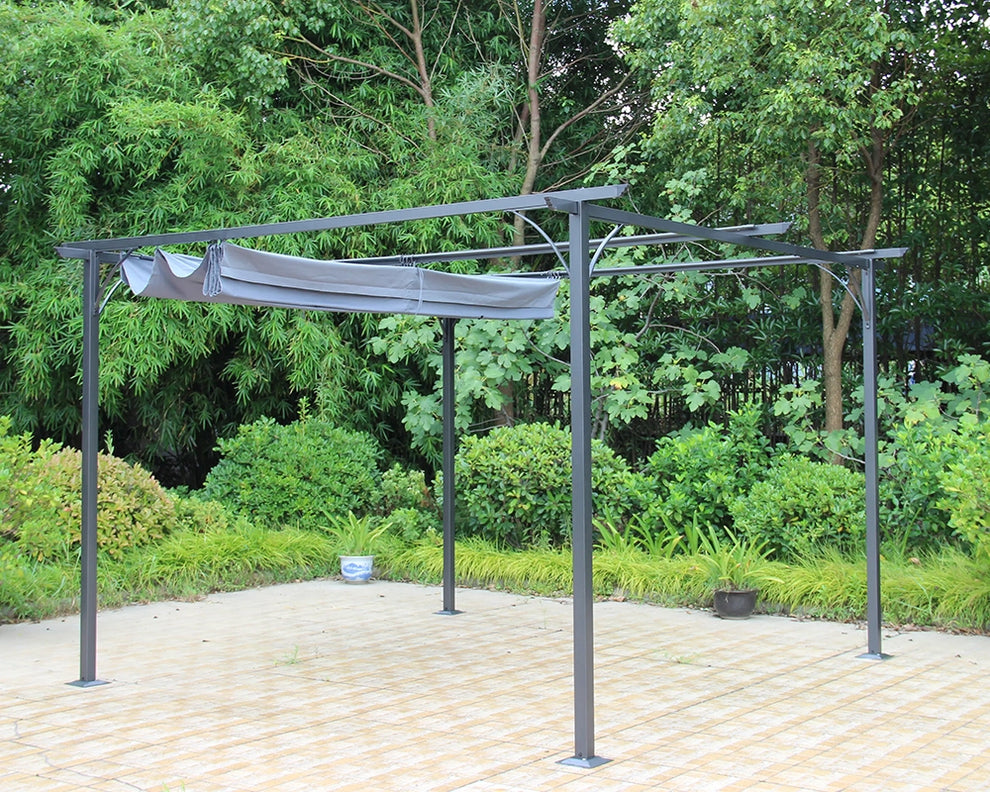
There's something special about a permanent gazebo that changes how you experience your garden. Unlike the pop-up shelters you wrestle with every summer, a proper fixed structure becomes part of your outdoor landscape, a place that's always there waiting for you, whether that's for morning coffee in May or an autumn evening wrapped in blankets.
Choosing a permanent gazebo isn't a casual decision, though. You're investing in a feature that'll define your garden for years, so getting it right matters. The good news is there's never been more choice, from sleek contemporary metal designs with retractable roofs to classic wooden pergolas that become greener and lovelier as climbing plants establish.
In this guide, I'm going to walk you through twelve distinct permanent gazebo ideas that work brilliantly in UK gardens. We'll explore everything from compact solutions for small patios to grand entertaining spaces, contemporary steel structures to traditional heritage designs. Each idea includes practical considerations alongside the inspiration, so you can start visualising what's actually possible in your own outdoor space.
Why Choose a Permanent Gazebo for Your Garden?
The Difference Between Permanent and Temporary Gazebos
The fundamental distinction comes down to how these structures are installed and built. Temporary gazebos sit on weighted bases or get pegged into lawn, designed to be assembled when needed and stored away afterwards. They're built lighter, with materials chosen for portability rather than longevity.
Permanent gazebos, by contrast, are anchored properly to foundations, whether that's concrete footings, bolted fixings into paving, or substantial ground anchors. This fixed installation allows for heavier, more durable materials and construction methods that simply wouldn't work on a moveable structure.
The material quality differs significantly too. Permanent structures use rust-resistant treated metals, pressure-treated timber, and weather-resistant components designed for constant exposure to British weather. Temporary gazebos prioritise lightweight fabrics and basic frames that won't withstand years of wind, rain, and UV exposure without degrading.
Benefits of Permanent Garden Structures
The most obvious advantage is year-round usability. Your gazebo isn't packed away in the shed for eight months, it's a constant presence that extends how you use your outdoor space across all seasons. Morning frost on the roof beams in January can be just as beautiful as dappled shade in July.
Property value and garden appeal improve noticeably with well-chosen permanent structures. Estate agents recognise that quality garden buildings add genuine market value, particularly when they're thoughtfully designed and properly maintained. A permanent gazebo signals that the outdoor space has been invested in and cared for.
There's also something liberating about eliminating that annual setup ritual. No more wrestling with poles and fabric on a breezy May weekend, hoping you remembered which bit connects where. Your gazebo is simply there, ready to use the moment you fancy sitting outside.
Permanent Gazebo Idea 1: Contemporary Steel Frame Gazebos with Retractable Roofs
If you want versatility built into your permanent structure, steel gazebos with retractable roof systems offer something genuinely clever for unpredictable UK weather. One minute you're enjoying full sun, the next you've extended the canopy against a sudden shower, all without leaving your seat.
The Prague 3.5m x 3.5m Grey Steel Framed Gazebo showcases exactly what modern permanent metal structures can achieve. The retractable fabric roof slides smoothly along the steel frame, giving you complete control over coverage. Want to stargaze on a clear evening? Retract it fully. Drizzle forecast for lunch? Extend it before you set the table.
The generous 3.5m square footprint creates proper outdoor room dimensions, easily accommodating a six-person dining table or a comfortable lounge setup with sofas and coffee table. The grey steel frame treated for rust resistance means this structure genuinely handles year-round exposure without deteriorating.
Design Features and Garden Integration
Contemporary steel gazebos bring clean architectural lines to gardens, particularly effective in modern or minimalist outdoor spaces. The slim metal posts don't visually dominate like chunky timber might, creating structure without overwhelming smaller gardens.
Neutral colour finishes, typically grey, black, or occasionally white, complement rather than compete with your planting and paving choices. This restraint allows the gazebo to anchor your design whilst letting seasonal colour from flowers and foliage take centre stage.
Steel frames suit contemporary materials beautifully. Pair them with composite decking, porcelain paving, or rendered walls for a cohesive modern aesthetic. The metal reflects light differently through the day, adding subtle visual interest without fuss.
Practical Considerations
Foundation requirements for permanent metal gazebos vary with installation surface. On existing patio or decking, you'll typically bolt the frame directly through the surface into concrete beneath, or use substantial anchor plates. On soil or lawn, concrete footings at each post position provide the necessary stability.
The anchoring matters more than you might think. A properly secured steel frame will stand firm through winter storms, whilst inadequate fixing creates constant anxiety every time the forecast turns nasty.
Maintenance expectations are refreshingly minimal. Annual checks of fixings, occasional cleaning of the frame, and inspection of the retractable fabric covers your responsibilities. The fabric roof typically lasts 3-5 years before UV exposure necessitates replacement, but that's a straightforward fix rather than structural concern.
Customisation options expand the functionality significantly. Add solar-powered LED strip lighting around the frame perimeter for evening ambience. Install clip-on curtain tracks to introduce privacy screening or insect protection. Mount infrared heaters to extend usability into cooler months. The metal framework accepts these additions far more readily than temporary structures.
Permanent Gazebo Idea 2: Traditional Wooden Pergola Gazebos
There's a timeless quality to wooden pergolas that never seems to fade from fashion. Perhaps it's the natural warmth of timber, or the way these structures invite climbing plants to transform them into living garden features. Either way, wooden pergola-style gazebos remain one of the most popular permanent options for UK gardens.

The Chunky Wooden Pergola 3M X 2.4M demonstrates classic pergola construction beautifully. The pressure-treated timber resists rot and decay whilst maintaining that gorgeous natural grain. The rectangular footprint, measuring 3m by 2.4m, suits many garden layouts perfectly, particularly long narrow spaces or areas alongside walls where you want to create defined zones.
This size works brilliantly for covering outdoor furniture sets, creating a shaded dining area, or even sheltering a hot tub whilst maintaining the open, airy feel that characterises traditional pergola design.
Creating a Living Garden Room
The real magic of wooden pergolas unfolds over seasons as climbing plants establish. Train fragrant roses up the posts and they'll reward you with blooms and scent filtering through your outdoor space. Wisteria creates spectacular cascades of purple or white flowers in May, its twisted stems adding winter interest when leaves drop.
Clematis varieties offer flowers from spring through autumn depending on which you choose. Montana types smother the structure in May with clouds of pink or white blooms. Large-flowered hybrids provide statement flowers through summer.
Honeysuckle brings evening fragrance and attracts wildlife, whilst jasmine offers delicate white flowers and intoxicating scent. Grape vines create edible crops alongside beautiful foliage, their leaves turning golden in autumn.
Natural shade develops gradually as plants mature. In year one, you might have minimal coverage. By year three, a well-chosen climber creates dappled shade that filters harsh midday sun whilst maintaining airflow. This living roof provides cooling without the darkness of solid coverage.
Integration with traditional garden styles happens almost automatically. Wooden pergolas complement cottage gardens, heritage properties, established landscapes, and even contemporary designs when paired with architectural planting. The natural material bridges different aesthetics more successfully than most manufactured alternatives.
Customisation and Finishing Options
Timber accepts finishes beautifully, offering customisation options that metal can't match. Leave the pressure-treated wood natural and it'll weather to an attractive silvery-grey patina over several years. This aged appearance suits relaxed, informal gardens perfectly.
Alternatively, apply wood stain in colours ranging from light oak through rich mahogany to soft sage green or classic white. Exterior stains penetrate the timber whilst allowing grain to show through, offering colour without the painted look.
Full paint coverage works too, particularly for contemporary gardens or period properties where painted woodwork features. Farrow & Ball's exterior paint range includes gorgeous subtle shades that look sophisticated without shouting.
Permanent Gazebo Idea 3: Premium Polycarbonate Roof Gazebos for All-Weather Protection
If genuine rain protection matters more than open-roof aesthetics, permanent gazebos with polycarbonate roofing deliver proper all-weather shelter whilst maintaining a bright, light-filled space beneath.
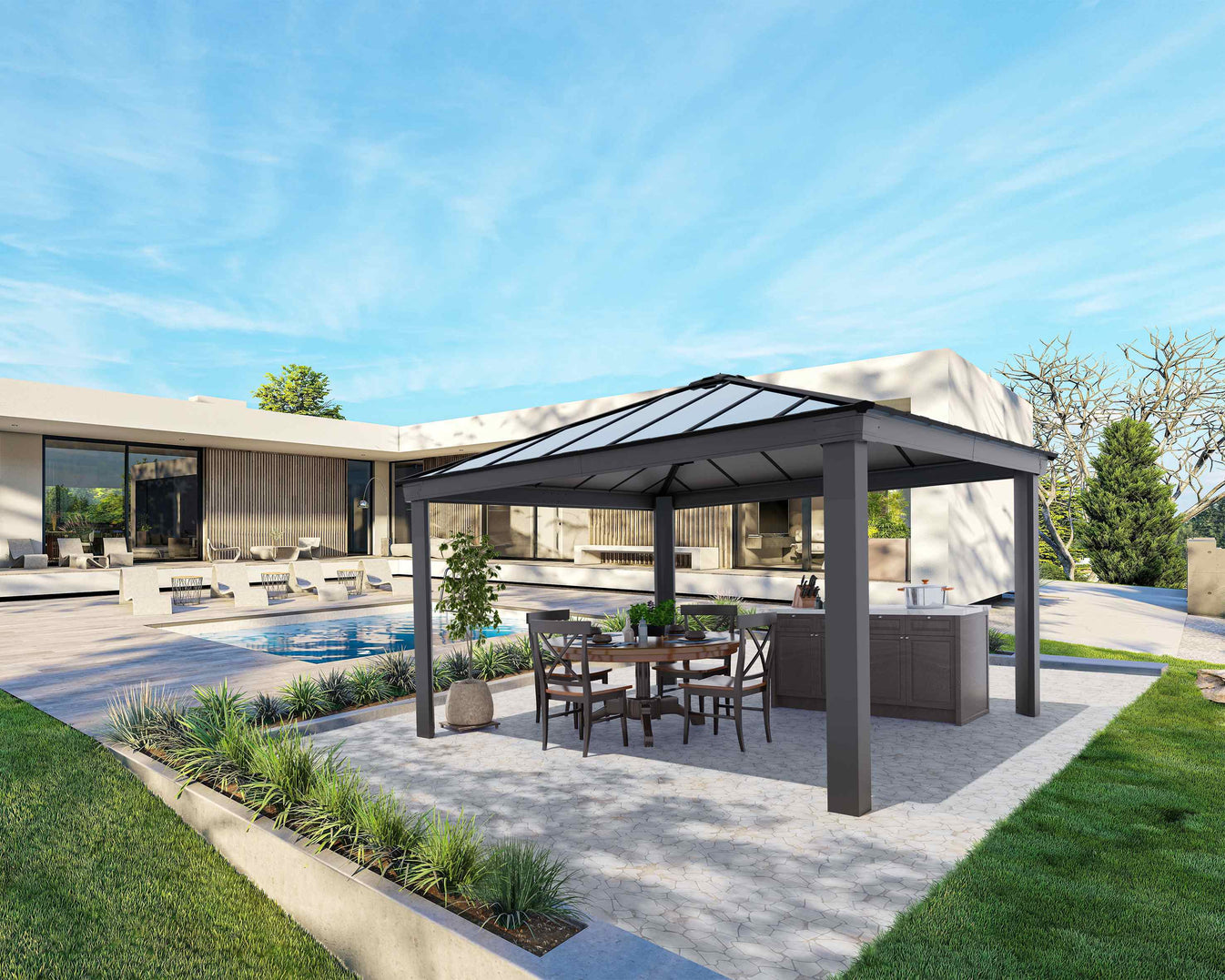
The Dallas 14ft x 14ft Grey Gazebo represents the premium end of polycarbonate-roofed permanent structures. The substantial size, roughly 4.3m square, creates a genuinely impressive outdoor room suitable for large dining tables, multiple seating areas, or even as a hot tub enclosure with surrounding deck space.
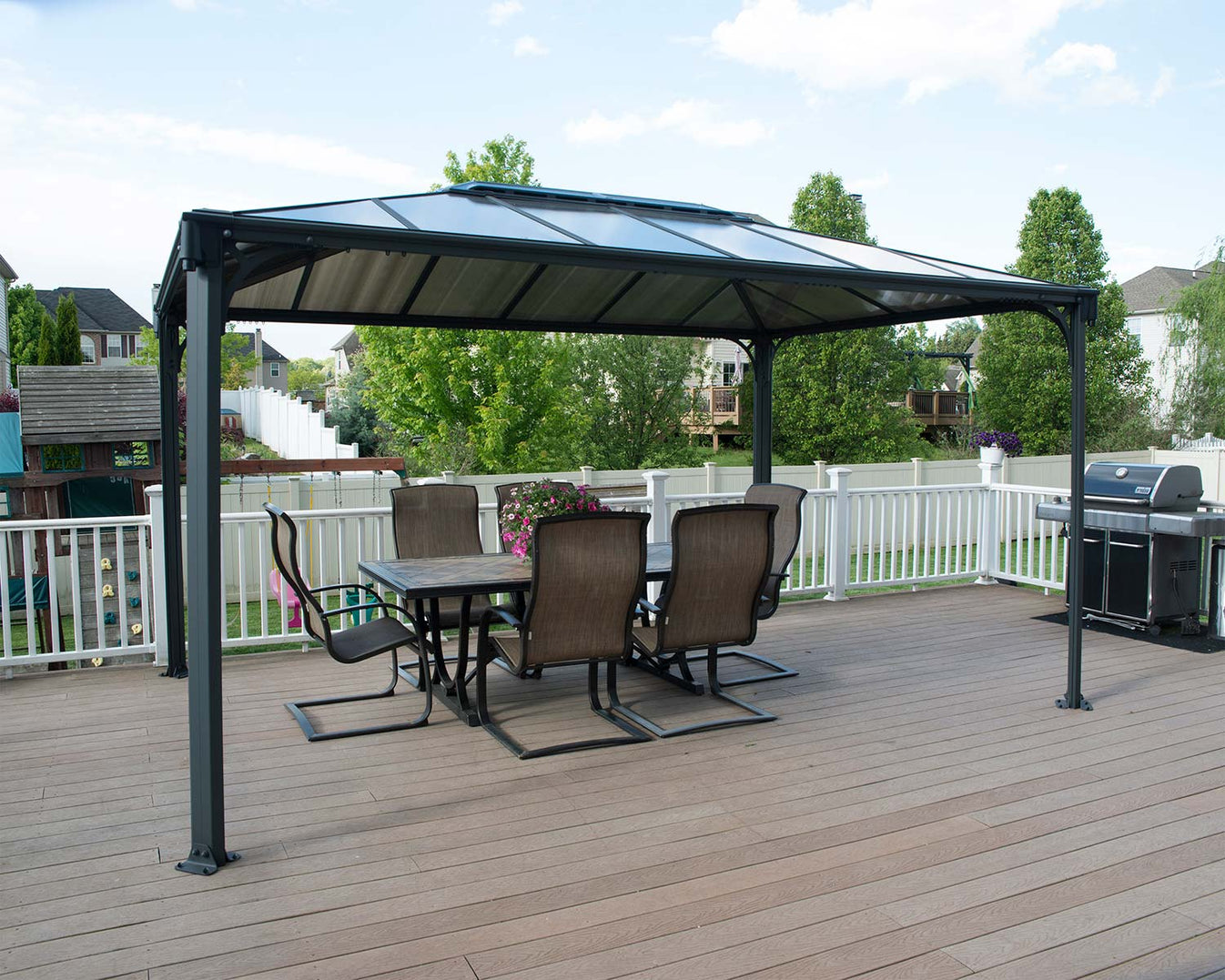
For a more accessible price point without sacrificing quality, the Martinique 4300 Rectangular Gazebo offers similar polycarbonate protection in a rectangular footprint. The UK manufacturing adds appeal for those who prefer supporting domestic production, whilst the powder-coated aluminium frame delivers the same corrosion resistance and longevity.
Benefits of Polycarbonate Roofing
Light transmission sets polycarbonate apart from solid roofing materials. Unlike opaque tiles or metal sheets that create dark spaces beneath, polycarbonate panels allow diffused natural light through whilst blocking harmful UV rays. You get genuine shelter without the cave-like feel.
Rain protection is absolute. Properly installed polycarbonate roofs with appropriate overlap and sealing shed water completely. No more hurried furniture covering when clouds gather, no cancelled garden dinners because drizzle's forecast.
Ideal Uses and Garden Styles
Outdoor dining areas benefit enormously from polycarbonate-roofed gazebos. The rain protection means you can leave tables set, confident that sudden showers won't ruin anything. Natural light filtering through makes meals feel outdoor rather than enclosed.
Hot tub shelters gain year-round usability with proper roofing. Steam escapes through ventilation gaps whilst rain and debris stay out. Privacy screening on one or more sides creates intimate spa atmospheres.
Year-round garden rooms become genuinely achievable. Add infrared heating and your polycarbonate-roofed gazebo remains comfortable through autumn and into winter. The shelter from wind and rain extends the outdoor season by months.
Contemporary garden integration works naturally with aluminium-framed polycarbonate gazebos. The clean lines and neutral finishes suit modern landscaping perfectly. But surprisingly, these structures also work in traditional settings when surrounded by lush planting that softens the architectural lines.
Permanent Gazebo Idea 4: Large Entertaining Gazebos for Garden Parties
When hosting outdoors is a priority, generous permanent structures create the space and shelter needed to entertain properly regardless of weather.
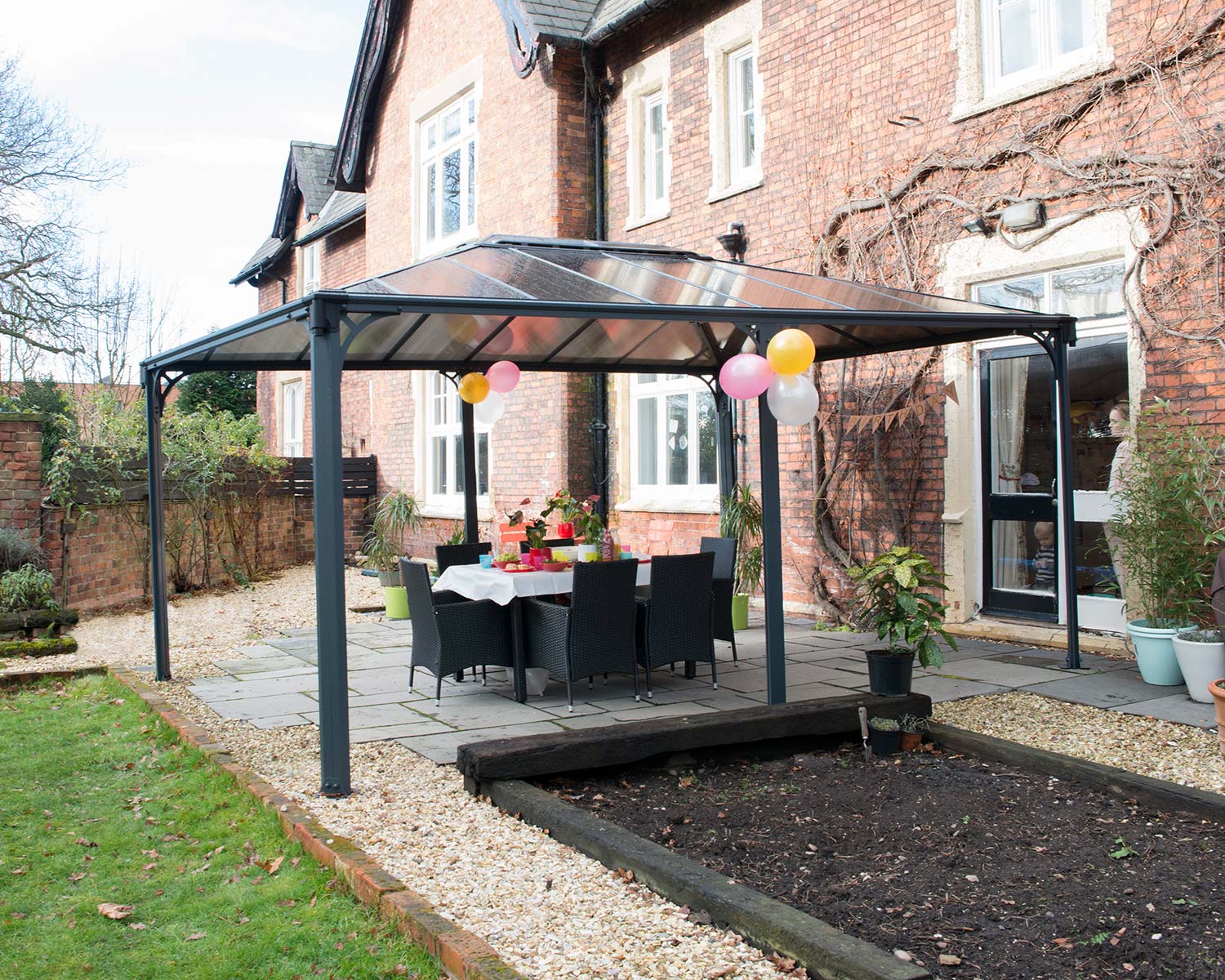
The Martinique 5000 Rectangular Gazebo delivers serious entertaining space with dimensions approaching 5m in length. This scale accommodates eight to ten people comfortably around a dining table with room for serving stations, or creates multiple seating zones for more casual gatherings.
The corrosion-resistant aluminium frame handles permanent installation without maintenance concerns, whilst the polycarbonate roof provides genuine weather protection that keeps parties going through unexpected showers. Despite the substantial size, the DIY assembly approach with pre-drilled profiles makes installation achievable for capable homeowners.
Planning for Outdoor Entertaining
Size calculations need to account for more than just table dimensions. An eight-person dining table measures roughly 2m x 1m, but you need at least 1m clearance behind each seat for people to pull chairs out and move comfortably. That turns a 2m table into a 4m x 3m usable area before considering serving space or circulation.
Lounge arrangements require different calculations. A standard three-seater sofa measures around 2m long. Add armchairs, coffee table, and circulation space and you're looking at 3m x 3m minimum.
Flow and access considerations matter enormously in large gazebos. Can people move freely between seating areas and into the garden without squeezing past furniture? Is there clear access from the house carrying trays of food and drinks? These practical questions determine whether your entertaining space actually works.
Lighting and electrical planning should happen before installation rather than after. Running power to a permanent gazebo allows for proper fixed lighting, potential for music systems, and convenience outlets for everything from phone charging to electric heaters. Burying cable during installation is infinitely easier than trenching afterwards.
Creating an Outdoor Dining Room
Furniture placement strategies differ under large gazebos compared to in gardens generally. The roof creates a defined ceiling height, so positioning the table centrally feels more balanced than pushing it to one edge.
Consider sight lines when placing seating. Can diners see into the garden, or are they staring at fence panels? Orientation matters more under a permanent structure than in open space.
Weather protection for guests extends beyond just overhead shelter. Large gazebos often benefit from one or two sides partially enclosed with curtains or screens. This blocks prevailing wind without creating a fully enclosed feel, maintaining that outdoor atmosphere whilst improving comfort.
Seasonal decoration ideas adapt the space throughout the year. Summer might bring vibrant tablecloths and fresh flowers. Autumn introduces lanterns, warm throws, and foliage arrangements. Winter celebrations work beautifully with fairy lights, evergreen garlands, and perhaps outdoor-safe candles in hurricane glasses.
Permanent Gazebo Idea 5: Luxury Gazebos with Integrated Lighting
Evening usability extends enormously when lighting is integrated into your permanent gazebo design from the start, rather than added as an afterthought with tangled extension cables and battery-powered lanterns.

The Luxury Gazebo 3x3m with LED and Taupe Curtains showcases how integrated solar-powered LED lighting transforms permanent garden structures. The built-in lights run along the roof frame, creating ambient illumination without visible wiring or the need for electrical connection.
The taupe curtains add another layer of luxury and functionality, providing privacy when desired whilst the neutral colour palette suits various garden styles. Weather-resistant materials throughout ensure this genuinely functions as a year-round outdoor room rather than seasonal decoration.
Integrated Lighting Benefits
Solar-powered convenience eliminates electrical installation costs and complications. The panels charge during daylight and power LEDs automatically as darkness falls, requiring no switches, timers, or thought beyond initial setup.
Evening ambience created by well-designed integrated lighting is hard to overstate. Soft illumination overhead allows conversation and dining to continue naturally as daylight fades, without the harsh brightness of spotlights or the inadequate glow of candles alone.
Extended seasonal use follows naturally from good lighting. Autumn and winter evenings arrive earlier, but with proper illumination your gazebo remains inviting and usable rather than becoming a dark corner you avoid.
Energy efficiency with solar-powered LEDs means zero running costs and minimal environmental impact. Modern LED technology provides surprisingly bright, pleasant light whilst drawing minimal power.
Luxury Features for Permanent Gazebos
Curtain systems elevate basic shelter into proper outdoor rooms. Full-height curtains that zip or tie closed create privacy for intimate gatherings or afternoon naps in the garden. Partial curtains on one or two sides block low sun angles whilst maintaining openness.
Permanent Gazebo Idea 6: Cabana-Style Gazebos with Full Curtain Enclosures
Privacy and enclosure capabilities distinguish cabana-style gazebos from more open pergola designs, creating outdoor rooms that feel genuinely separate from the wider garden.

The Dubai 3m x 3m Steel Framed Gazebo in Mocha brings warmth through colour whilst delivering full enclosure capabilities. The mocha brown tone offers a softer alternative to standard grey, bridging the gap between metal construction and wooden aesthetics.
The adjustable curtain sides zip fully closed to create a private outdoor sanctuary, perfect for spa-like relaxation or intimate gatherings. The powder-coated steel frame handles permanent installation without maintenance concerns, whilst the weather-resistant fabric roof and sides provide genuine all-season shelter.
Privacy and Shelter Benefits
Creating enclosed outdoor rooms transforms how you use garden space. With curtains closed, your gazebo becomes a private retreat where you can relax without feeling overlooked by neighbours or passersby.
Wind protection improves dramatically with curtain enclosures. Even partially closed sides block prevailing winds that would make open structures uncomfortable on breezy days. This wind reduction can raise perceived temperature by several degrees.
Insect screening capabilities matter more than many people realise before owning an enclosed gazebo. Summer evenings become genuinely pleasant when you can sit outside without constant mosquito annoyance or wasps investigating your dinner.
Adjustable openness levels allow you to respond to changing conditions throughout the day. Morning might find all curtains open to catch sun and views. Afternoon brings one or two sides closed against low sun. Evening closes all sides for cosy enclosure.
Styling Enclosed Permanent Gazebos
Furniture selection for enclosed spaces differs from open gazebos. The protected environment allows fabrics and cushions that wouldn't survive fully exposed outdoor use. Consider upholstered pieces, layered cushions, and textiles that bring indoor comfort outside.
Heating options make enclosed gazebos usable well beyond typical outdoor season. Electric infrared heaters mount to frame corners, radiating warmth without fumes. Chimineas or outdoor wood burners create focal points whilst heating, though ensure adequate ventilation when curtains are closed.
Flooring and base treatments complete the outdoor room feel. Outdoor rugs define zones and add softness underfoot. Interlocking deck tiles create finished floors over existing paving. In permanent installations, some people even lay artificial grass within the gazebo footprint for an unusual but comfortable surface.
Colour coordination with curtains ties the design together. Choose cushions, throws, and accessories that complement or contrast with curtain tones. The mocha brown shown here pairs beautifully with cream, terracotta, or deep forest green accents.
Choosing the Right Permanent Gazebo Design for Your Garden
Assessing Your Space and Needs
Measuring and planning starts with accurate dimensions of available space. Measure not just the proposed gazebo footprint but access routes for delivery and assembly. Note any overhead obstacles like tree branches or phone lines that might interfere with installation or use.
Create a scale drawing of your garden, even just rough, and sketch potential gazebo positions. This reveals spatial relationships more clearly than imagining positions whilst standing in the garden.
Sun and shade patterns change dramatically through the day and seasons. Observe your garden at different times before committing to gazebo placement. That sunny breakfast spot might be scorching at dinnertime. The shaded afternoon retreat could be too dark for morning use.
Mark sun and shade patterns on your scale drawing at different times. This helps position gazebos where shade or sun aligns with intended use.
Existing garden style guides material and design choices. Contemporary minimalist gardens suit metal structures with clean lines. Traditional cottage gardens harmonise with wooden pergolas. Period properties need heritage-appropriate designs.
Fight the temptation to choose gazebos purely on aesthetics without considering existing style. A sleek metal gazebo might look stunning in magazine photos but clash horribly with your Victorian terrace garden.
Primary use case determines essential features. If outdoor dining dominates, you need full weather protection and generous dimensions. If plant support matters most, open-roof pergolas work beautifully. If hot tub coverage is the goal, ventilation and moisture resistance become critical.
List your top three intended uses and ensure your chosen gazebo design supports all of them. Don't compromise essential functionality for aesthetic preferences.
Budget considerations extend beyond initial purchase to include installation, foundation work, and long-term maintenance. A cheaper gazebo requiring annual treatment might cost more over ten years than an expensive but maintenance-free option.
Calculate total ten-year cost including purchase, installation, maintenance products, and potential repairs or updates. This reveals true value more accurately than initial price alone.
Material Selection: Metal vs Wood vs Hybrid
Durability comparison shows both materials lasting 15-20 years with proper care, but achieving that lifespan requires different commitments.
Metal gazebos, particularly galvanised steel or aluminium, resist corrosion when properly treated. Powder-coated finishes protect frames effectively. Fabric elements like canopies and curtains need replacing periodically, but structural elements last decades.
Wooden gazebos built from pressure-treated timber resist rot and decay but require ongoing maintenance. Annual treatment with preservative or stain protects timber from moisture and UV damage. Neglected wood deteriorates within years.
Maintenance requirements differ dramatically. Metal structures need occasional cleaning and annual checks of fixings. Fabric components need replacing every few years. Beyond that, maintenance barely exists.
Wood demands annual treatment, regular inspection for damage, and potential repairs as the structure ages. Enjoy this maintenance as therapeutic garden time or resent it as unwanted obligation? Your answer indicates whether wood suits you.
Aesthetic preferences remain deeply personal. Some people simply prefer natural timber warmth. Others love contemporary metal minimalism. Neither preference is wrong, but choosing against your aesthetic instincts creates structures you'll never quite love.
Climate suitability in the UK slightly favours metal for coastal areas where salt air accelerates timber deterioration. Inland gardens suit either material equally well. Heavily shaded damp gardens might prefer metal's rot resistance over wood's vulnerability.
Foundation and Installation Planning
Ground preparation requirements vary with installation method and gazebo type. Soft soil needs compacting before paving or foundations. Existing paving must be stable and level. Slopes require either levelling or stepped installation.
Concrete footings for each gazebo post create the most stable permanent installation. Dig holes roughly 50cm deep, install post, and fill with concrete. This works for soil or lawn installation.
Bolting to existing paving requires drilling through to concrete beneath, or using substantial surface-mounted anchor plates. Either method creates secure fixing on hard surfaces.
Professional vs DIY installation depends on your capabilities and the gazebo complexity. Basic pergolas suit confident DIYers with help lifting components. Large polycarbonate-roofed structures might justify professional installation despite higher cost.
Consider whether you can handle the physical demands. Can you lift heavy components safely? Work at height on ladders comfortably? Kneel and reach for extended periods? If these activities cause problems, professional installation might prove worthwhile.
Timeline matters too. DIY installation typically spans multiple weekends once you account for foundation curing time and actual assembly. Professional installation compresses this dramatically, often completing jobs in a single day.
Planning permission considerations apply to larger gazebos or those close to boundaries. In England and Wales, permitted development allows outbuildings up to certain sizes without formal permission, but rules vary for listed buildings and conservation areas.
Check with your local planning authority before purchasing if your gazebo exceeds 2.5m height, sits closer than 2m to boundaries, or covers more than half your garden. Better to confirm requirements than discover you need retrospective permission.
Building regulations generally don't apply to garden gazebos as they're not habitable buildings. However, if you're creating a garden office with proper insulation, heating, and year-round use, building control might take interest.
Timeline expectations vary enormously. Simple pergolas might take a weekend to install. Complex polycarbonate structures could span multiple weekends. Professional installation compresses time but increases cost.
Factor in foundation curing time if using concrete. Post footings need 48-72 hours to set before assembling the structure. Rush this and you risk movement during assembly.
Frequently Asked Questions About Permanent Gazebos
How long do permanent gazebos last?
Lifespan varies with materials, quality, and maintenance, but quality permanent gazebos should serve 15-20 years minimum, with many exceeding this significantly.
Metal gazebos built from galvanised steel or aluminium with powder-coated finishes last 20+ years structurally. The frame itself should remain sound indefinitely with proper care. Fabric elements like canopies and curtains need replacing every 3-5 years as UV exposure degrades materials, but this is straightforward maintenance rather than structural failure.
Wooden gazebos using pressure-treated timber last 15-20 years minimum when properly maintained. The critical factor is consistent annual treatment with preservative or stain. Well-maintained timber pergolas can exceed 25-30 years. Neglected structures might show serious deterioration within 5-7 years.
Polycarbonate roofing lasts 10-15 years before UV exposure causes yellowing or brittleness. Budget for roof panel replacement during your gazebo's lifetime, though the supporting frame will outlast original panels.
Quality matters enormously. Budget gazebos using thin metals, basic timber, or poor fixings deteriorate faster than premium alternatives. Initial investment in quality construction pays dividends in longevity.
Can I install a permanent gazebo myself?
Many permanent gazebos suit confident DIY installation, though capabilities vary with structure complexity and your experience level.
Basic wooden pergolas with straightforward post-and-beam construction work well for competent DIYers. You'll need basic tools: drill, socket set, level, and saw for any trimming. More important than tools is assistance, lifting heavy timber beams safely requires multiple people.
Metal gazebos generally offer easier DIY assembly than wooden alternatives. Components bolt together with clear instructions. The lighter weight compared to chunky timber means fewer people needed for most stages.
Complex polycarbonate-roofed structures fall somewhere between straightforward and challenging. The frames assemble similarly to basic metal gazebos, but fitting roof panels accurately requires patience and precision. Manufacturer instructions usually assume DIY installation, so assess whether you're comfortable following detailed assembly guides.
Foundation work might justify professional help even if you handle gazebo assembly yourself. Digging and setting concrete footings correctly affects structural stability for the gazebo's lifetime. Poor foundations cause movement, leaning, and potential failure.
Consider your physical capabilities honestly. Can you lift heavy components safely? Work at height on ladders comfortably? Kneel and reach for extended periods? If these activities cause problems, professional installation might prove worthwhile.
Timeline matters too. DIY installation typically spans multiple weekends once you account for foundation curing time and actual assembly. Professional installation compresses this dramatically, often completing jobs in a single day.
What's the best material for a permanent gazebo in the UK?
No single material wins universally, the "best" choice depends on your priorities, garden style, and maintenance preferences.
For low-maintenance convenience, metal gazebos excel. Galvanised steel or aluminium frames resist corrosion effectively in British weather. Annual maintenance involves checking fixings and cleaning frames, nothing more. If minimal upkeep appeals, metal deserves serious consideration.
For natural aesthetics and traditional garden integration, wooden gazebos remain unmatched. Timber brings warmth and character that complements planting beautifully. Pressure-treated wood handles UK weather well with proper maintenance. If you value natural materials and don't mind annual treatment, wood suits perfectly.
For maximum weather protection whilst maintaining light, aluminium frames with polycarbonate roofing combine metal's durability with genuine rain shelter and UV protection. These suit anyone prioritising year-round usability.
Coastal locations slightly favour metal over wood due to salt air accelerating timber deterioration. Inland gardens suit either material equally well.
Budget influences material choice too. Basic wooden pergolas often cost less initially than equivalent metal gazebos. However, metal's minimal maintenance might deliver better value long-term once you factor treatment costs across years.
How do I maintain a permanent gazebo?
Maintenance requirements vary dramatically with materials, but establishing simple routines keeps permanent gazebos looking great for decades.
Metal gazebo maintenance starts with annual cleaning. Hose down frames to remove dirt and debris. For stubborn grime, use mild detergent and soft brush, avoiding abrasive cleaners that damage protective coatings.
Check fixings annually. Tighten any bolts or screws that have loosened. Inspect welds and joints for cracks or damage. Address any rust spots immediately by cleaning back to bare metal, treating with rust inhibitor, and touching up with appropriate paint.
Fabric canopies and curtains need removing for washing periodically. Most are machine washable on gentle cycles. Allow complete drying before refitting. Inspect for tears, worn seams, or UV damage. Budget for fabric replacement every 3-5 years.
Wooden gazebo maintenance demands more attention. Annual treatment with wood preservative or stain protects against moisture and UV damage. Clean timber first, removing dirt, algae, and old loose finish. Apply treatment according to manufacturer instructions, typically two coats.
Inspect wooden structures for signs of rot, particularly where water might collect or at ground contact points. Soft spots or discolouration indicate problems requiring attention. Catching rot early prevents serious structural damage.
Check that timber treatments remain effective by testing water repellency. Splash water on wood surfaces, it should bead rather than soak in. If water soaks in, treatment has degraded and reapplication is needed.
Polycarbonate roof maintenance involves annual cleaning with mild detergent and soft cloth. Avoid abrasive cleaners or rough materials that scratch panels, as scratches promote algae growth and look unsightly.
Inspect polycarbonate for cracks, excessive yellowing, or brittleness indicating UV degradation. Whilst panels should last 10-15 years, severe weather or poor installation might necessitate earlier replacement.
Clean gutters and drainage channels if fitted. Blocked gutters overflow, potentially causing water damage to frames or surrounding areas.
Seasonal tasks supplement annual maintenance. Before winter, remove any loose items that could blow about in storms. Check that roof fixings are secure. Clear autumn leaves from roof and gutters. In spring, refresh any winter-damaged finishes and prepare fabrics for season ahead.
Creating Your Perfect Permanent Garden Shelter
The six permanent gazebo ideas we've explored represent genuinely different approaches to creating covered outdoor space, from contemporary retractable-roof designs to traditional wooden pergolas, luxury gazebos with integrated lighting to practical hot tub shelters.
There's no universally "perfect" permanent gazebo, only the right choice for your specific garden, lifestyle, and priorities. Someone prioritising low maintenance and year-round weather protection makes very different decisions than someone dreaming of a rose-covered living structure or a heritage-appropriate feature for a period property.
The investment in a quality permanent gazebo shapes how you experience your garden for years, potentially decades. It's worth taking time to consider not just immediate needs but how you envision using outdoor space as seasons change and years pass.
Start by honestly assessing your space, maintenance willingness, and primary intended uses. Let these practical considerations guide material and design choices. Then add your aesthetic preferences to narrow options further. The sweet spot where function meets beauty creates permanent gazebos you'll treasure and use constantly rather than admire occasionally.
Your garden deserves more than just plants and paving. A thoughtfully chosen permanent gazebo becomes the heart of outdoor living, the place where memories accumulate across summer dinners, autumn reading sessions, and winter evenings wrapped in throws watching rain drum on the roof overhead.


